Balloon Garland Color Combinations (30+ Palettes That Work)
The colors you choose make or break a balloon garland. A good combination looks styled and expensive, while a random mix looks messy. These balloon garland color combinations give you palettes that always work, organized by theme, season, and occasion, plus the ratio trick that ties them together.
At DecorWillow, our top tip is the four-shade formula: pick one main color, one accent, and two neutrals or tones of the main. That mix reads as intentional every time.
- Best for: any balloon garland
- Key formula: 1 main + 1 accent + 2 tones
- Finishes: mix matte and a little metallic
- Includes: palettes by theme and season
- Setup: works for any garland size
Table of Contents
- The color formula that always works
- How to mix shades and finishes
- Neutral and boho palettes
- Bright and fun palettes
- Pastel and soft palettes
- Palettes by season
- Palettes by occasion
- Backdrop and lighting considerations
- Before and after
- Ratios: how many of each color
- Shopping guide
- Worth it vs skip
- Common mistakes
- Color combo checklist
- FAQ
- Related articles
The color formula that always works
The easiest way to pick colors is a simple formula: one main color, one accent, and two supporting tones (often neutrals or lighter and darker shades of the main). Four shades give a garland depth without looking busy. Add a touch of metallic or a single bright pop if you want extra interest.
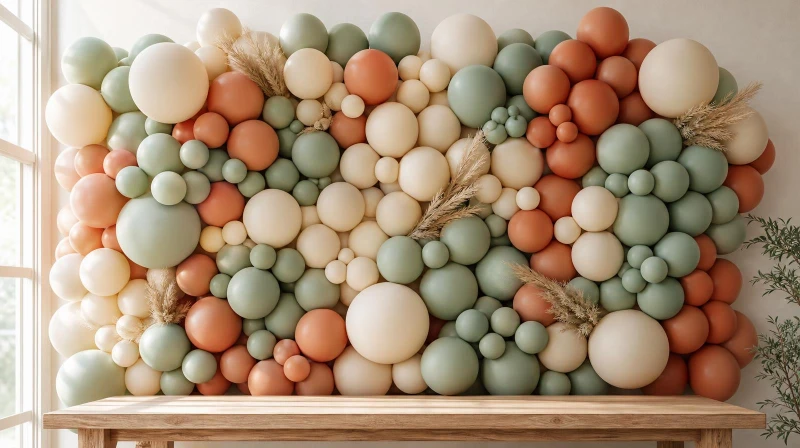
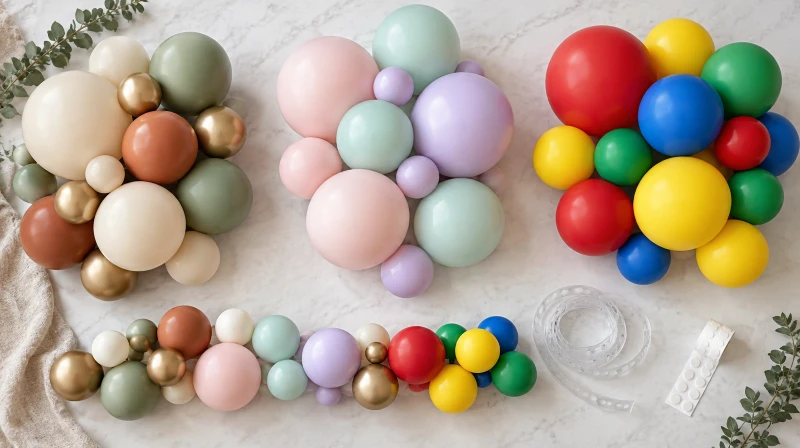 A visual breakdown of the four-shade formula: one dominant base color, two supporting neutral tones, and a refined metallic accent.
How to mix shades and finishes
A few tricks make any palette look professional:
- Use several sizes of balloons, from small (5-inch) to large (16 or 18-inch), for a sculpted, full look.
- Mix a few tones of one color family rather than one flat, single shade.
- Add a little metallic (chrome gold, rose gold, or champagne) as a small 10% accent rather than the main color.
- Mostly matte or satin balloons look significantly more modern and upscale than all-shiny latex.
- Keep the finish consistent across the garland so the installation feels intentional.
- Pro Tip (Double-Stuffing): For custom muted designer shades (like custom eucalyptus or terracotta), professional balloon stylists often “double-stuff” by placing one colored balloon inside another before inflating. This produces a rich, completely opaque matte finish that prevents daylight transparency.
For the build itself, here is how to make a balloon garland without a kit.
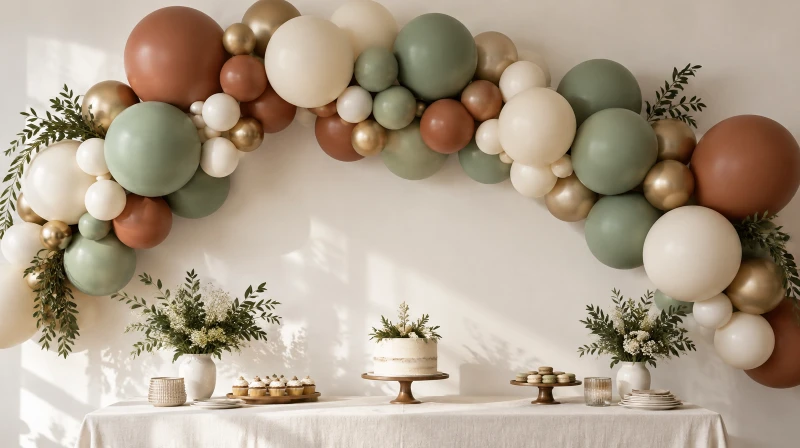
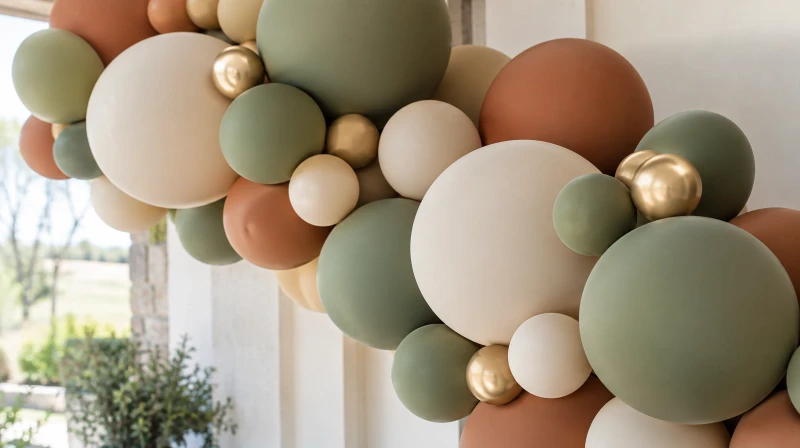 Mixing several tones and sizes, with a little metallic accent, makes a garland look professional.
Neutral and boho palettes
Soft, natural combinations that suit baby showers, bridal showers, and modern minimalist parties:
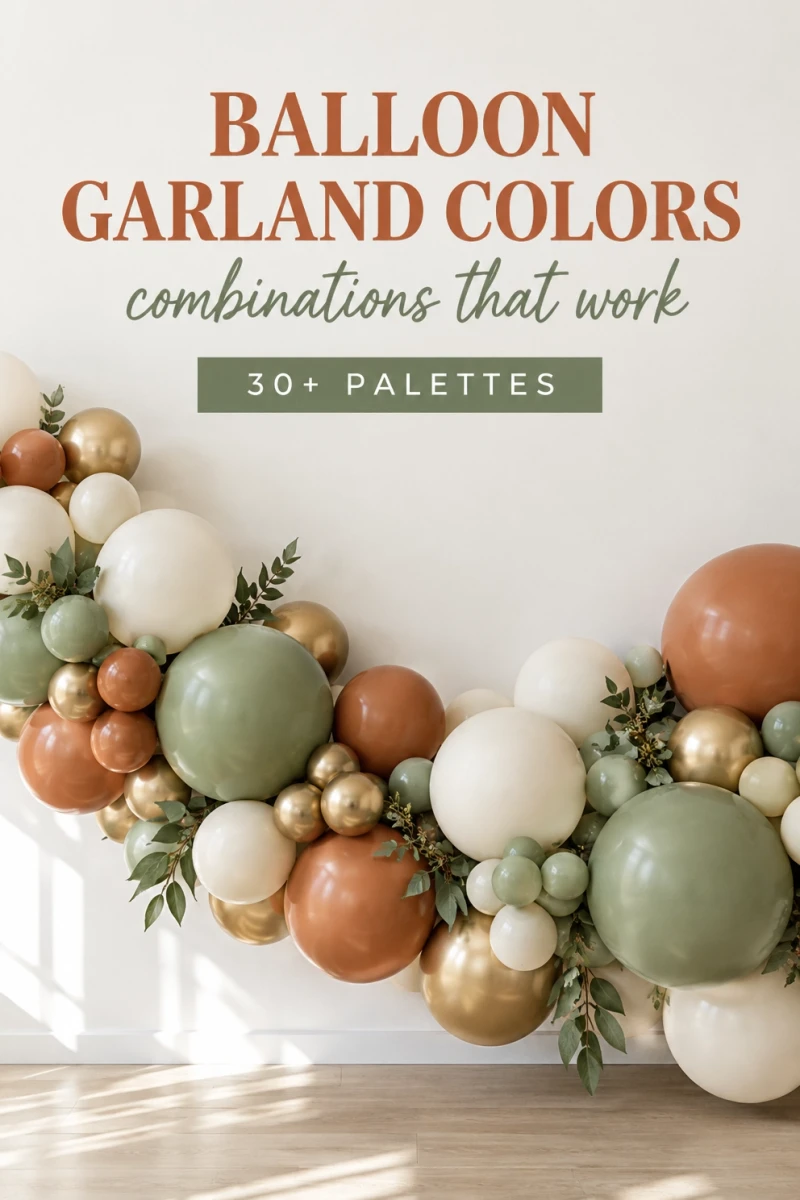
- Cream + Sage + Tan + Gold: The ultimate botanical boho mix. Works beautifully against raw wood arches or white shiplap walls.
- Blush + Cream + Terracotta + Sand: Warm and earthy. The terracotta anchors the palette while blush adds soft warmth.
- White + Greige + Taupe + Wood: High-end modern organic styling. Pairs seamlessly with pampas grass and rattan furniture.
- Sage + White + Eucalyptus Green + Cream: Fresh, clean, and garden-inspired. Ideal for gender-neutral nursery events.
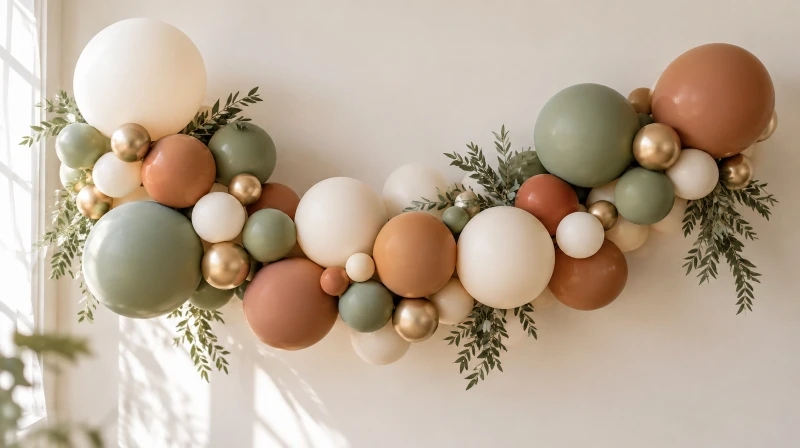 Neutral and boho palettes like cream, sage, and terracotta look soft, modern, and expensive.
Bright and fun palettes
Cheerful, high-energy combinations for children’s birthdays, graduations, and summer celebrations:
- Red + Yellow + Blue + Green (Primary): The timeless carnival and toy-theme classic. Keep the yellow and blue slightly dominant to prevent color overload.
- Rainbow Order (Red to Purple): Clean gradient transitions along the garland look far more organized than randomized rainbow spots.
- Hot Pink + Orange + Yellow (Sunset): Vibrant tropical energy that pops brilliantly against dark teal or natural hedge greenery backdrops.
- Teal + Coral + Navy + White: Coastal and modern. Navy grounds the garland while coral delivers a refreshing punch.
Pastel and soft palettes
Gentle, dreamy combinations for first birthdays, christenings, and spring tea parties:
- Blush + Peach + Cream + Gold: Sweet, delicate, and timeless. The cream softens the peach while metallic gold adds celebration shine.
- Mint + Lavender + Baby Blue + White: Cool pastel harmony that mimics fresh springtime florals.
- Soft Pink + Lilac + Cream: A soft storybook aesthetic that photographs crisp against white or pale gray backdrop boards.
- Butter Yellow + Sage + White: Warm yet understated, perfect for vintage wildflower or “little ray of sunshine” party themes.
Palettes by season
Align your garland colors with natural seasonal moods:
- Spring: Blush, mint, lavender, cream. Light, airy, and floral.
- Summer: Coral, teal, sunny yellow, crisp white. High contrast that handles bright outdoor sun.
- Fall: Rust, mustard, cream, rich warm brown. Earthy and cozy, pairing well with dried florals.
- Winter: Crisp white, silver, icy blue, or deep forest green and champagne gold for festive warmth.
Palettes by occasion
Quick, foolproof picks tailored for popular celebrations:
- Baby Shower (Neutral): Cream, sage, tan, gold.
- First Birthday (Girl): Blush, cream, dusty rose, chrome gold.
- First Birthday (Boy): Dusty blue, slate blue, warm white, cream.
- Milestone Birthday (30th, 40th, 50th): Matte black, chrome gold, ivory white.
- Valentine’s / Galentine’s: Soft blush, berry pink, ruby red, champagne.
- Christmas & Holiday: Deep crimson, forest green, warm gold, winter cream.
Backdrop and lighting considerations
How your balloon garland looks in person and in photos depends heavily on the backdrop and lighting:
- Lighting Color Temperature: Warm indoor lighting (2700K–3000K) warms up cool tones—turning dusty blues slightly greenish and making blush look peachy. Cool white daylight (4000K–5000K) keeps neutrals crisp and true-to-tone. Always preview your inflated balloons in the event room’s actual light before assembling the full garland.
- Backdrop Contrast: Avoid placing light cream or white balloons directly on an off-white wall without a darker framing color (like sage, slate, or gold) in between; otherwise, the garland loses dimensional depth.
- Outdoor Sunlight: Direct sun expands latex balloon air and oxidizes standard latex within hours, turning glossy balloons into a velvety matte. If hosting outdoors, inflate slightly under capacity to avoid popping.
Before and after
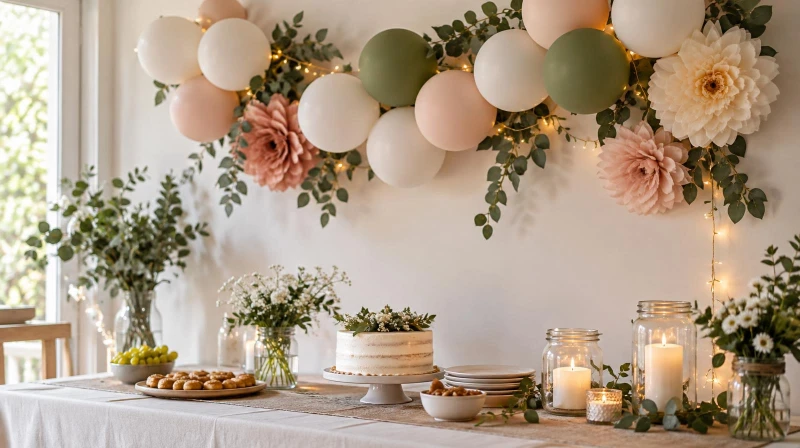
The right palette transforms a plain wall. Here is the same garland spot before and after, styled with a cohesive combination.
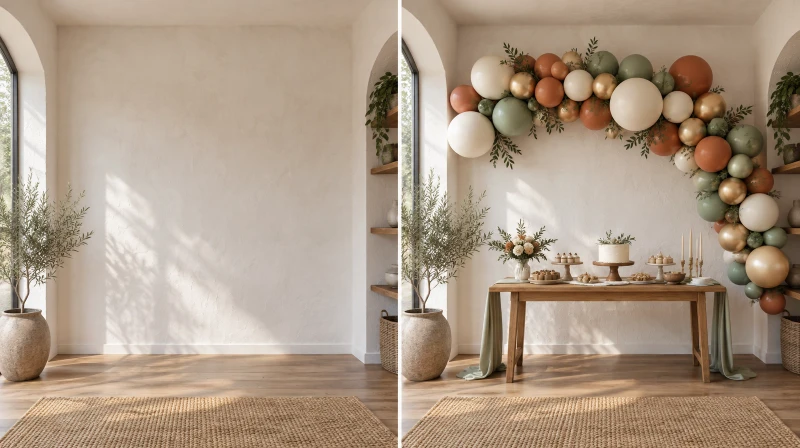 The same wall, transformed with a garland in a cohesive four-shade palette.
Ratios: how many of each color
A balanced garland uses roughly this split of your total balloons:
| Role | Share of balloons | Purpose |
|---|---|---|
| Main color | About 40% | Forms the backbone and dominant visual identity |
| Supporting tone 1 | About 25% | Adds depth and transitions shades smoothly |
| Supporting tone 2 | About 25% | Softens the palette (usually a neutral or light tone) |
| Accent / metallic | About 10% | Eye-catching sparkle that elevates the finish |
For a standard 70-balloon garland, that translates to approximately 28 main color balloons, 18 each of two supporting tones, and 6 metallic accents.
Shopping guide
- Buy a bulk pack in your main color, plus smaller individual packs for your supporting tones.
- Order a mix of sizes (5-inch for cluster clusters, 11-inch or 12-inch for the body, and 16 to 18-inch for statement anchors) to create genuine dimensional depth.
- Add one metallic chrome pack for the 10% accent.
- Buy about 10% extra balloons to account for accidental pops during inflation.
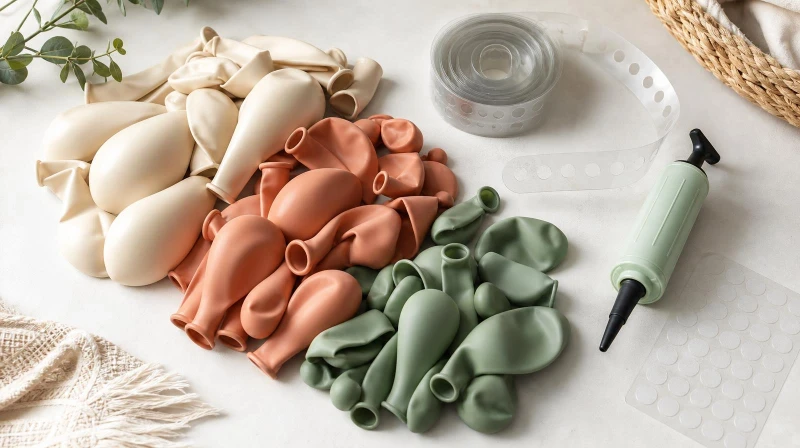
- A durable plastic garland strip and sticky glue dots make assembly straightforward. For curated kits with pre-matched ratios, see our best balloon garland kits guide.
- Safety Note: Uninflated or broken balloons can pose a choking hazard to young children. Follow official guidance from the U.S. Consumer Product Safety Commission (CPSC) by supervising children under eight and promptly discarding all popped balloon fragments.
Worth it vs skip
- Worth it: A cohesive four-shade palette, several balloon sizes, and matte finishes with small metallic pops. They create a sculpted, high-end look.
- Skip: All one flat shade, all shiny latex, or more than five competing colors. They make a garland look chaotic or cheap.
Common mistakes
- Too many colors. Sticking to about four curated shades keeps the installation cohesive.
- One flat shade. Mixing subtle tonal gradations gives the garland organic depth.
- Overusing metallic. Use chrome and metallic as accents (10%) rather than the main base.
- Uniform balloon sizing. Varying diameters from 5-inch to 18-inch gives a luxurious organic flow.
- Ignoring the backdrop. Always ensure enough contrast between your garland colors and the wall or drape behind it.
Color combo checklist
- One main color (approx. 40%)
- One accent (approx. 10%, often chrome metallic)
- Two supporting tones or neutrals (approx. 25% each)
- Multiple balloon sizes (5”, 11”/12”, 18”)
- Mostly matte finish with consistent luster
- 10% extra balloons for spares and pops
- Palette tested under the venue’s actual lighting
- Palette matched with backdrop color for contrast
FAQ
What colors go well together for a balloon garland?
Use a four-shade formula: one main color, one accent (often gold or another metallic), and two supporting tones or neutrals. Cohesive combinations like cream, sage, and terracotta or blush, cream, and gold always look styled.
How many colors should a balloon garland have?
About four shades works best: a main color, an accent, and two supporting tones. Fewer can look flat, and more than five often looks busy. Mixing tones of one color adds depth without adding clutter.
How many of each color balloon do I need?
A balanced split is roughly 40% main color, 25% and 25% for two supporting tones, and 10% accent or metallic. For a 70-balloon garland, that is about 28 main, 18 and 18 supporting, and 6 accent.
Should balloon garlands be matte or shiny?
Mostly matte looks more modern and expensive, with a little metallic as an accent. All-shiny can look cheaper, so keep metallics to a small share and keep the finish consistent across the garland.
What are good neutral balloon garland colors?
Cream, sage, tan, and gold, or blush, cream, terracotta, and sand, are popular neutral and boho combinations. They suit baby showers, first birthdays, and modern parties, and photograph beautifully.
What balloon colors are best for a first birthday?
For a girl, blush, cream, and gold; for a boy, dusty blue, sky blue, and cream; and for either, a neutral cream, sage, and tan. Soft palettes look sweet and photograph well for first birthdays.
How do I make a balloon garland look expensive?
Use a cohesive four-shade palette, several balloon sizes, mostly matte finishes with a small metallic accent, and a consistent finish across the garland. Depth and cohesion are what make it look professional.
Related articles
- How to Make a Balloon Garland Without a Kit
- Best Balloon Garland Kits
- Balloon Wall & Ceiling Ideas
- 15 Party Backdrop Ideas
📌 Pin this for later!