Easter Table Decorations (Fresh & Pretty Spring Ideas)
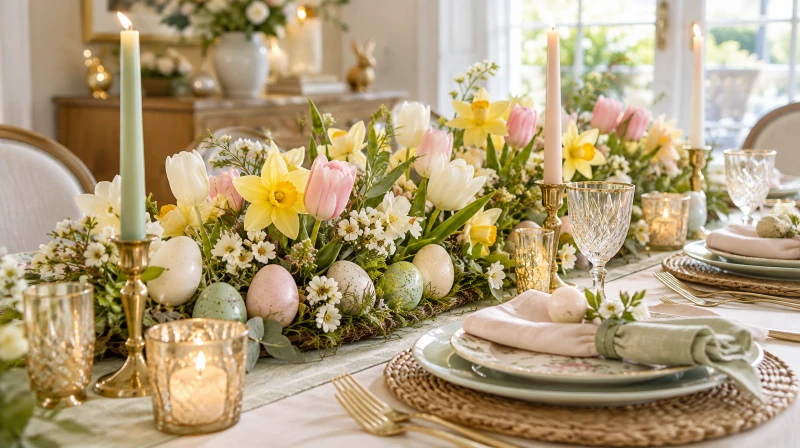
An Easter table is one of the most cheerful tablescapes of the entire year: soft spring pastels, fresh seasonal blooms, woven textures, and delicate accents like speckled eggs and botanical greenery. Designing an inviting Easter table does not require expensive china or overflowing floral arrangements; it comes together naturally with a low centerpiece, balanced proportions, and a cohesive spring palette. These Easter table decorations walk you through color schemes, centerpiece construction, place settings, table dimension scaling, flower care, and candle safety.
At DecorWillow, our foundational styling advice is to anchor the center of the table with a low floral arrangement first: fresh tulips, ranunculus, or daffodils paired with natural moss and speckled eggs. Once your low focal point is established, the surrounding place settings fall into place effortlessly.
- Style aesthetic: fresh, airy spring botanical
- Best for: Easter Sunday family lunch, brunch, or spring dinner
- Color palette: pastel tints, crisp cream, natural sage green, soft gold
- Budget: about $45 (reusing household dishes and linens)
- Setup time: 1 to 1.5 hours on the morning of the event
Table of Contents
- The layering approach
- Easter color palettes
- Centerpiece ideas
- Before and after
- Place setting ideas
- Easter decor style aesthetics
- Table dimensions and guest-count layouts
- Cut flower care and stem preparation
- Candle safety on foliage tables
- Egg and bunny touches
- Exact quantities you need
- Budget breakdown
- Worth it vs skip
- Small table version
- Setup timeline
- Kid-friendly touches
- Table checklist
- FAQ
- Related articles
The layering approach
A beautifully styled Easter tablescape is built systematically in three visual layers:
- The Base Foundation: A textured linen tablecloth, woven burlap runner, or natural gauze fabric that runs the length of the table. A neutral runner softens the wood surface while establishing the center boundary.
- The Low Centerpiece Layer: Low-profile floral vessels, ceramic egg dishes, and tapered candles arranged down the centerline. Keeping arrangements under 10 to 12 inches tall preserves open sightlines across the table so conversation flows without obstruction.
- The Place Setting Accents: Individual chargers, folded cloth napkins, personalized egg name cards, and small chocolate or botanical favors tucked into each seat.
This tiered approach creates depth and richness without overcrowding plate margins or serving platters.
Easter color palettes
Selecting a cohesive color scheme ties your florals, linens, and paper accents together seamlessly:
| Palette Combination | Dominant Hues | Atmosphere & Vibe | Best Accent Elements |
|---|---|---|---|
| Classic Pastel Mix | Butter yellow, soft blush, baby blue, cream | Timeless, cheerful, traditional | Speckled pastel eggs, white tulips, woven rattan |
| Modern Botanical | Sage green, soft blush, ivory | Understated, organic, contemporary | Italian ruscus, eucalyptus sprigs, matte ceramics |
| Sunny Spring Garden | Daffodil yellow, crisp white, clover green | Warm, bright, energetic | Lemon slices, yellow ranunculus, gingham napkins |
| Elegance & Gold | Soft lilac, muted sage, brushed gold | Refined, upscale, celebratory | Brass candleholders, gilded eggs, satin ribbon |
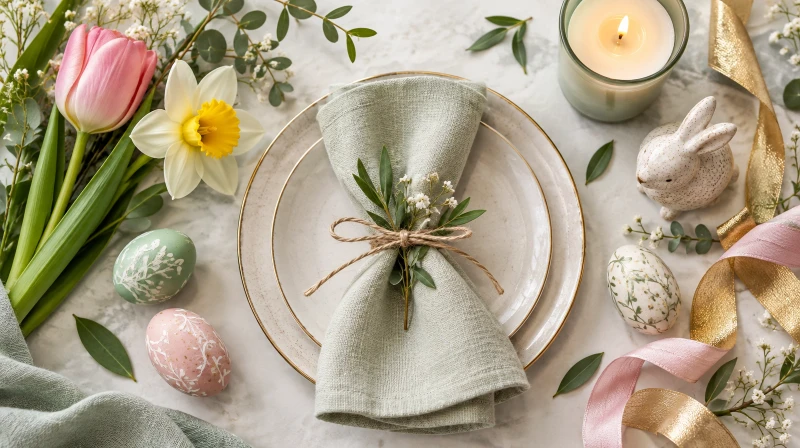 Soft pastels paired with cream, sage green, and brushed gold deliver a balanced, photogenic spring tablescape.
Centerpiece ideas
The centerpiece serves as the visual spine of your table. Always prioritize low, modular arrangements over tall, rigid floral vases:
- Cluster of Bud Vases: Arrange 5 to 7 assorted amber, clear, or ceramic bud vases along a table runner, each holding 2 to 3 stems of tulips or daffodils. This distributes color evenly and is easy to move when serving family-style platters.
- Low Ceramic Pedestal Bowl: Place a wide, shallow compote dish in the center filled with floral foam or a flower frog, packed with tulips, sweet peas, ranunculus, and trailing ivy.
- Living Wheatgrass or Moss Troughs: Line a long wooden planter box with living wheatgrass, faux moss, and pastel speckled eggs nestled between blooms.
- Nesting Bowl Display: Fill an organic wooden or woven wire basket with Spanish moss, wooden eggs, and baby’s breath.
For complementary centerpiece techniques and vessel inspiration, view our party centerpiece ideas guide.
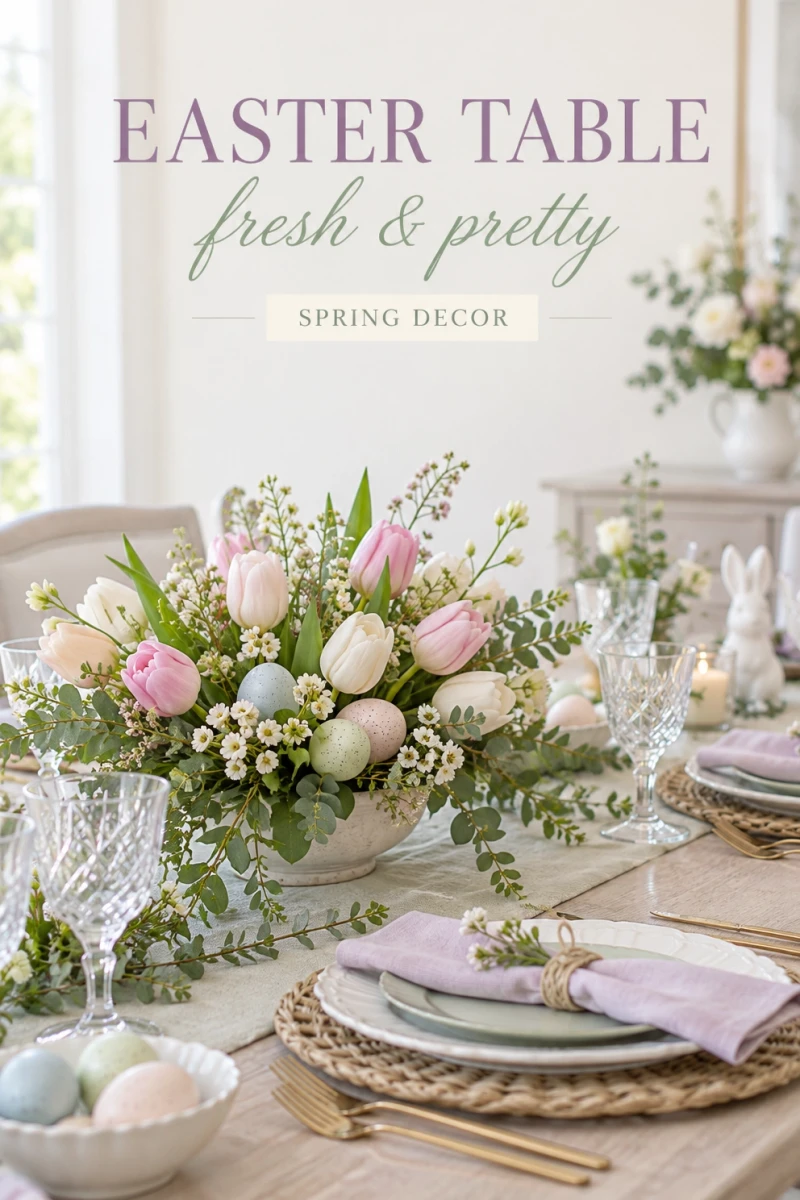
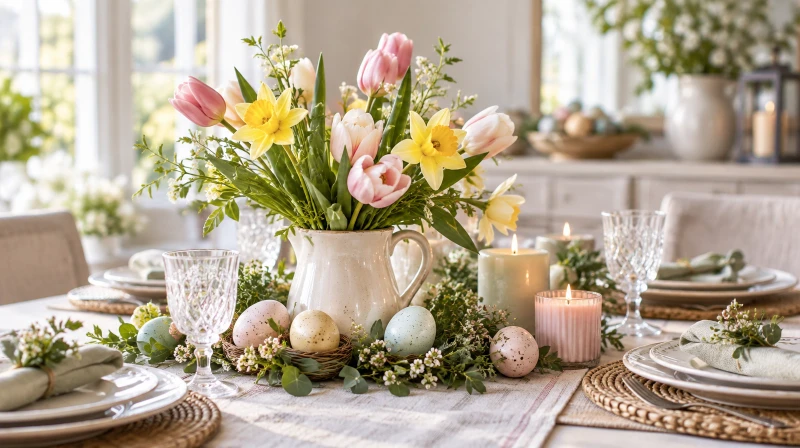 A low arrangement of fresh tulips, ranunculus, and nestled eggs maintains open sightlines for seated guests.
Before and after
Thoughtful styling transforms an everyday dining table into an inviting spring celebration. Here is a side-by-side comparison of a bare wooden table compared to one layered with fresh textures and seasonal accents.
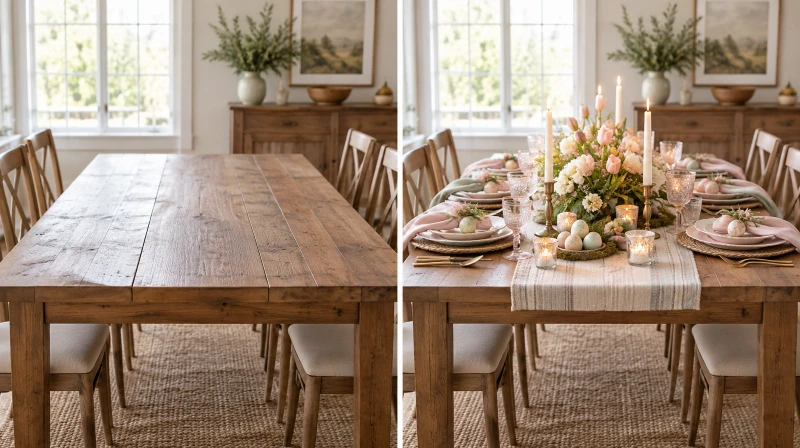 A bare dining table elevated into an abundant Easter tablescape using layered runners, fresh spring blooms, and personalized place settings.
Place setting ideas
Individual settings make guests feel welcomed and pampered the moment they take their seats:
- Twine-Tied Linen Napkins: Fold cloth napkins into soft rectangles, wrap with natural jute twine or velvet ribbon, and slip a sprig of fresh rosemary or lavender underneath.
- Calligraphy Egg Name Cards: Hand-letter guest names onto dyed or wooden eggs using a fine-point gold or white gel pen, resting each egg atop folded napkins or in mini ceramic egg cups.
- Bunny Napkin Folds: Fold a square cloth napkin around a dyed egg and tie the top with baker’s twine to create playful bunny ears.
- Mini Potted Plant Favors: Place a miniature 2-inch terracotta pot containing a sprouting pansy, mini succulent, or primrose at the top corner of each plate.
- Artisan Chocolate Nests: Create miniature nests out of toasted vermicelli or spun chocolate topped with three candy-coated chocolate eggs.
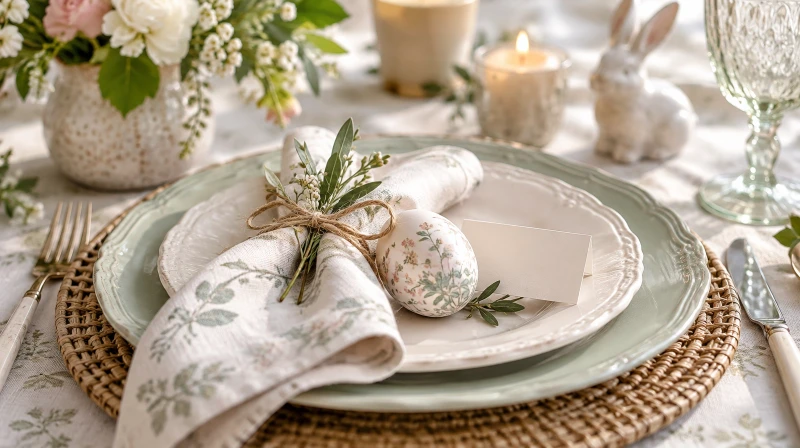 A crisp napkin tied with twine, fresh herbs, and an egg name card creates an intimate, considered place setting.
Easter decor style aesthetics
Tailor your table styling to reflect your personal home interior:
- Classic Spring Pastel: White ironstone plates, pastel linen napkins, silver flatware, and overflowing pitcher vases filled with mixed spring tulips.
- Rustic Farmhouse: Weathered wood table runner, galvanized metal or terracotta vessels, burlap ribbons, quail eggs in mini twigs, and chamomile flowers.
- Modern Minimalist: Clean white ceramic plates, linen napkins with no-tie folds, sleek matte black candleholders, and single-stem yellow ranunculus in clear geometric glassware.
- Whimsical Garden Brunch: Floral block-print tablecloth, vintage colored depression glassware in pink or green, miniature woven bunny baskets, and loose garden roses.
Table dimensions and guest-count layouts
To prevent overcrowding your tabletop, coordinate arrangement lengths and plate spacing with your table’s physical dimensions:
| Table Shape & Size | Seating Capacity | Recommended Runner Dimensions | Centerpiece Configuration | Clear Margin Around Plates |
|---|---|---|---|---|
| Round / Square (36” – 42”) | 4 Guests | Square overlay (45” x 45”) | 1 central low bowl (max 8” wide) | 12” plate clearance |
| Rectangular (6 Feet) | 6 Guests | 72” x 14” runner (leaves 6” drop) | 1 central vase + 2 flanking bud vases | 14” plate clearance |
| Rectangular (8 Feet) | 8–10 Guests | 96” x 14” runner (leaves 12” drop) | 3 staggered floral clusters + 4 candles | 15” plate clearance |
| Banquet (10–12 Feet) | 10–12 Guests | 120”–144” continuous runner | Continuous greenery garland + 5–7 vases | 16” plate clearance |
Cut flower care and stem preparation
Spring cut flowers are famously delicate. Follow these florist techniques to keep blooms pristine throughout Easter Sunday:
- Tulip Conditioning: Trim tulip stems at a 45-degree angle under cold running water. Tulips continue to grow up to an inch after being cut; place them in shallow, ice-cold water. Pricking a tiny pinhole through the stem just beneath the blossom head helps prevent air bubbles and keeps stems standing upright.
- Daffodil Sap Isolation: Daffodils (narcissus) secrete a toxic, thick sap that wilts other flowers when mixed immediately. Condition daffodils in a separate vase of water for 2 to 3 hours after cutting, rinsing their stems before combining them with tulips or ranunculus.
- Keep Away from Fruit Bowls: Never position your Easter floral arrangement adjacent to ripe bananas or apples; ripening fruit emits ethylene gas that causes spring flowers to drop petals prematurely.
Candle safety on foliage tables
Taper and pillar candles add warmth, but require strict safety precautions when placed near dry moss, paper, or greenery:
- Maintain Clearance: According to official National Fire Protection Association (NFPA) home candle safety guidelines, keep all open candle flames at least 12 inches away from anything that can burn. On table runners, maintain a minimum 3-inch barrier of clear ceramic or glass between open flames and loose moss or greenery sprigs.
- Use Sturdy Candlesticks: Ensure taper candles fit snugly into heavy brass, marble, or ceramic holders so they cannot wobble when guests pass dishes.
- Consider Flameless LED Tapers: If entertaining toddlers, playful pets, or hosting in a drafty dining room, high-end battery-operated flickering LED taper candles provide the exact same aesthetic glow with zero fire risk.
Egg and bunny touches
Incorporate holiday motifs tastefully to maintain a refined, cohesive aesthetic:
- Subtle Speckled Eggs: Use natural brown speckled quail eggs or painted wooden eggs scattered sparingly along the runner rather than bright plastic neon eggs.
- Understated Ceramic Rabbits: Place one or two matte white or stone bunny figurines as bookends along the centerpiece rather than crowding every seat with figurines.
- Wire or Wooden Nests: Position small twig nests filled with natural moss and hollowed eggs between floral vases.
- Hanging Botanical Branches: If ceiling space permits, suspend a blooming cherry blossom or pussy willow branch overhead hung with lightweight ribbon-tied blown eggs.
Exact quantities you need
For a standard Easter dining table accommodating 8 to 12 guests:
- Spring Flowers: 2 to 3 bunches (approximately 20 to 30 stems total of mixed tulips, ranunculus, and daffodils).
- Greenery: 1 bunch of Italian ruscus, seeded eucalyptus, or 1 package of preserved sheet moss.
- Decorative Eggs: 15 to 25 speckled wooden, ceramic, or dyed eggs.
- Candles: 4 to 6 taper candles in brass holders (or 6 to 8 glass votives).
- Place Settings: 1 charger, 1 dinner plate, 1 linen napkin, 1 egg name card, and 1 favor per seat.
Budget breakdown
Here is an itemized breakdown for styling a complete 8 to 12 person Easter tablescape:
| Item | What’s Included | Approx. Cost |
|---|---|---|
| Spring Cut Flowers | 2–3 bunches of grocery store tulips & daffodils | $18.00 |
| Decorative Eggs | 1 carton of speckled wooden or craft eggs | $10.00 |
| Taper / Votive Candles | 6 cream or pastel taper candles | $10.00 |
| Napkin Ribbon & Tags | Kraft cardstock tags and natural jute twine | $7.00 |
Total Estimated Budget: approximately $45.00. Sourcing clippings of ivy or blossoming branches from your garden and boiling natural onion-skin dyed eggs brings this total under $25.00.
Worth it vs skip
- Worth It: Fresh spring flowers in varied heights, real linen or cotton cloth napkins, and keeping the central arrangement low enough for eye contact.
- Skip: Tall top-heavy vases, noisy plastic grass, brightly colored plastic eggs that clash with pastel china, and scented candles that overpower the aroma of Easter dinner.
Small table version
If you are hosting at a 4-person breakfast nook or round bistro table:
- Eliminate long runners that bunch up on small surfaces; choose a round linen overlay or leave the bare wood exposed.
- Restrict florals to a single ceramic pitcher of tulips centered on the table.
- Place a single sprig of rosemary and an egg name card atop each plate to keep the table functional for serving dishes.
- Set desserts on an adjacent sideboard; explore our how to set up a dessert table guide for secondary surface styling.
Setup timeline
- 3 Days Before: Wash and press cloth napkins and runners; purchase candles, eggs, and name tags.
- 1 Day Before: Purchase fresh flowers, trim stems, and let them hydrate in cold water in a cool room; letter guest name cards.
- Morning of Easter (2 Hours Before): Lay the runner, arrange flowers into vessels, insert greenery and eggs, set dishes, and prepare glassware.
- 15 Minutes Before Guests Sit: Light candles and pour water into carafes.
Kid-friendly touches
Keep children engaged during Easter mealtime:
- Easter Coloring Placemats: Print custom spring activity placemats on kraft cardstock, accompanied by a small jar of pastel crayons.
- Chocolate Egg Favors: Place a small cellophane bag with pastel candy-coated chocolates or a hollow chocolate bunny at each child’s place.
- Egg Hunt Tokens: Hide a numbered golden egg under each child’s plate that reveals their starting clue for the backyard Easter egg hunt after dessert.
Table checklist
- Palette chosen: classic pastel, sage blush, or sunny yellow
- Table dimensions checked and runner sized to leave a 6–12” drop
- Fresh flowers trimmed at an angle and hydrated in cold water
- Low centerpiece vessels arranged (under 12” height)
- Candle clearance verified: minimum 3” away from foliage
- Place settings layered: plates, cloth napkins, glassware, and flatware
- Personalized egg name cards placed on napkins
- Kid-friendly coloring sheets or chocolates prepared if needed
FAQ
How do I decorate an Easter table on a budget?
To decorate an Easter table under $30, focus on high-impact natural elements. Purchase two inexpensive bunches of grocery store tulips, forage garden greenery (like ivy or boxwood clippings), dye white eggs using natural food ingredients (like red cabbage or onion skins), and reuse your everyday white plates layered with twine-tied cloth napkins.
What flowers last the longest on an Easter table?
Ranunculus, carnations, freesia, and potted bulb plants (such as mini daffodils or hyacinths) have the longest vase life, easily lasting 5 to 7 days. Cut tulips also look gorgeous, but should be bought in tight closed buds 2 days before the event and kept in cool water.
How do you prevent a low centerpiece from obstructing conversation?
Ensure your central floral arrangement does not exceed 10 to 12 inches in total height from the tabletop. Guests should easily make direct eye contact with anyone sitting across the table without having to duck or lean around tall branches.
What is the best way to clean and store decorative eggs for next year?
Wipe ceramic, wooden, or plastic decorative eggs with a dry microfiber cloth after the meal. Store them inside standard cardboard egg cartons or bubble wrap containers in a temperature-stable closet to prevent cracking or color fading.
Can I mix real flowers with faux greenery on an Easter table?
Yes, blending high-quality faux eucalyptus or sheet moss with fresh cut tulips or daffodils is an economical designer trick. The fresh blooms provide authentic fragrance and natural texture, while the faux greenery adds fullness without withering.
How far in advance can I set an Easter table?
You can lay table runners, chargers, plates, flatware, and calligraphed name cards the evening before. Fresh floral arrangements should be placed on the table 2 to 3 hours before guests arrive, and candles should only be lit 15 minutes prior to seating.
How many candles should you put on an 8-person Easter dining table?
For an 8-foot table seating 8 guests, 4 to 6 taper candles (or 6 to 8 glass votives) spaced evenly along the center runner provide adequate ambient light without overcrowding platters. Ensure each candle has at least 3 inches of clear space away from foliage.
Related articles
- Thanksgiving Tablescape Ideas
- Party Centerpiece Ideas
- How to Set Up a Dessert Table
- Botanical Baby Shower Ideas
📌 Pin this for later!