Eco-Friendly Party Decorations (Sustainable & Reusable Ideas)
Part of our guide: Party Backdrop and Decor Ideas: The Complete Guide
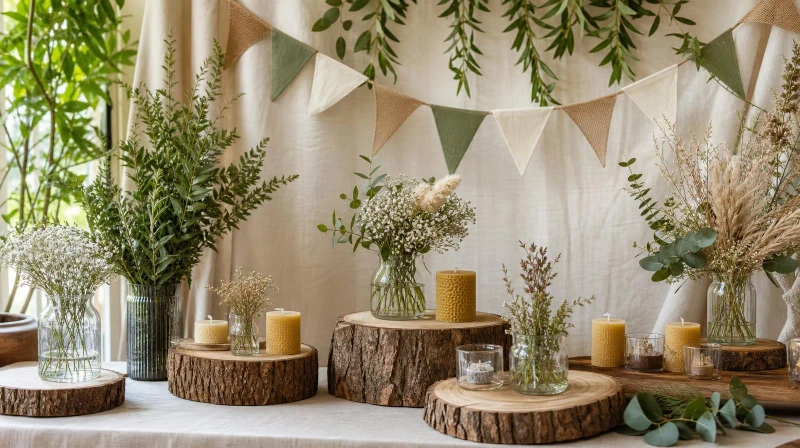
A pretty party does not have to end with a full trash bag. Fabric, greenery and paper can be reused, stored or composted, and the look is often cheaper too. Here is what to use, what to swap and how much to buy.
The simple test we use at DecorWillow: if you cannot reuse it, compost it or store it, think twice before buying it.
- Best for: any low-waste celebration
- Key idea: natural and reusable materials
- Swap out: single-use plastic and foil
- Budget: about $40 (see breakdown)
- Setup time: about 1.5 hours
Top Decor Picks for this Setup
Curated essentials on Amazon to help you recreate this setup easily.
Fabric Bunting Banner
Reusable triangle flag bunting in sage, cream, burlap and leaf-print fabric hung across every backdrop.
Natural Wood Slices
Thick tree-trunk rounds used as risers and centerpiece bases.
Beeswax Pillar Candles
Honeycomb-textured beeswax pillars in different heights.
Macrame Wall Hanging
Large fringed macrame tapestry behind the table (reusable decor image).
Table of Contents
- The low-waste rule
- Natural materials to use
- Reusable decorations
- Before and after
- Low-waste swaps
- Eco-friendly tableware
- Cost and quantities at a glance
- Best buys, skips and mistakes to avoid
- If you have little space
- Plan ahead
- Shopping checklist
- Helpful safety sources
- FAQ
- Related articles
The low-waste rule
The idea is simple: choose decorations you can reuse, compost, or recycle. To truly reduce waste, follow this simple hierarchy for your party planning:
- Reuse: Shop your own home first. Use jars, vases, and fabrics you already own.
- Borrow or Rent: Ask friends for extra chairs or cake stands, or rent them.
- Thrift: Check local thrift stores for inexpensive glass tableware or vintage fabrics.
- Buy Reusable: If you must buy new, invest in something you’ll use for years.
- Dispose Correctly: Know your local recycling and composting rules before you buy disposable items. (According to the EPA, reusing and borrowing are significantly more effective at reducing environmental impact than recycling).
A fabric backdrop stores away for next time, fresh greenery composts, and paper recycles. Skip the pieces that only go in the bin, like foil balloons and plastic streamers.
Natural materials to use
Nature does a lot of the decorating for free. Sourcing these locally or from your own yard significantly reduces transportation emissions:
- Fresh or dried flowers and greenery (forage from your garden or buy locally grown).
- Branches, pinecones, and leaves.
- Fruit like citrus, apples, or berries as decor.
- Wood slices and stones as risers and stands.
- Potted plants that guests can take home.
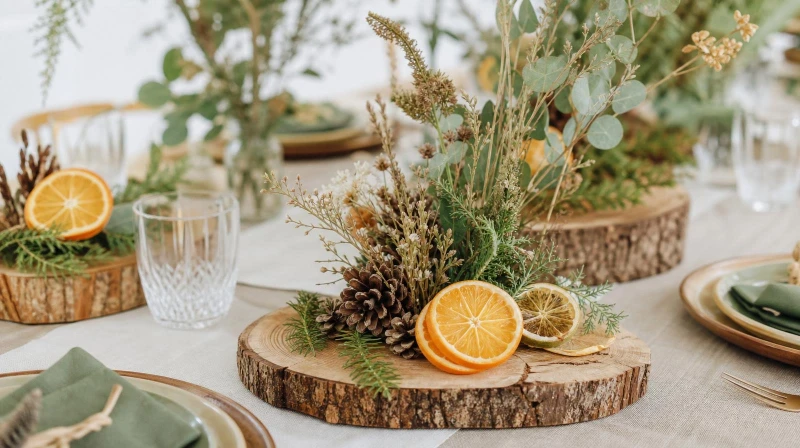 Fresh greenery, dried flowers, and wood slices decorate beautifully and compost or reuse afterward.
Reusable decorations
Buy once, use for years:
- A fabric or macrame backdrop instead of paper or foil. (Wash and roll fabric rather than folding to prevent harsh creases in storage).
- A cloth banner or bunting you can wash and store.
- Real or reusable fabric napkins and tablecloths.
- Glass jars and vases for flowers and candles. (Clean candle wax out with hot water so they’re ready for the next event).
- A tassel garland or fabric garland you keep and reuse.
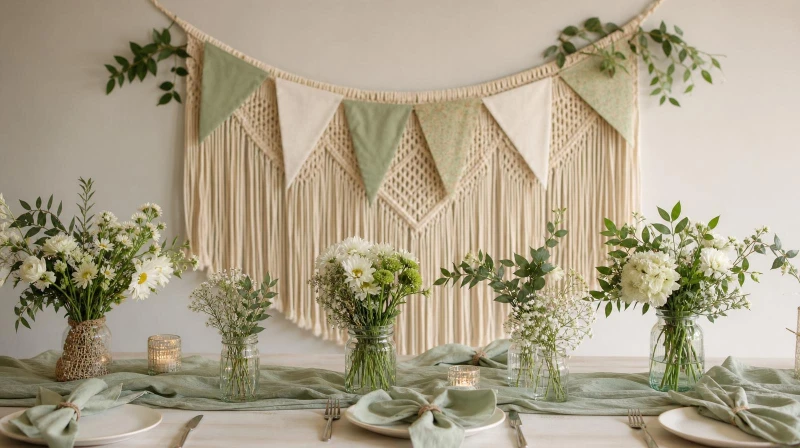 A fabric backdrop and cloth bunting store away and come out again for the next celebration.
Before and after
Eco decor looks just as styled as single-use. Here is the same corner before and after, using only reusable and natural pieces.
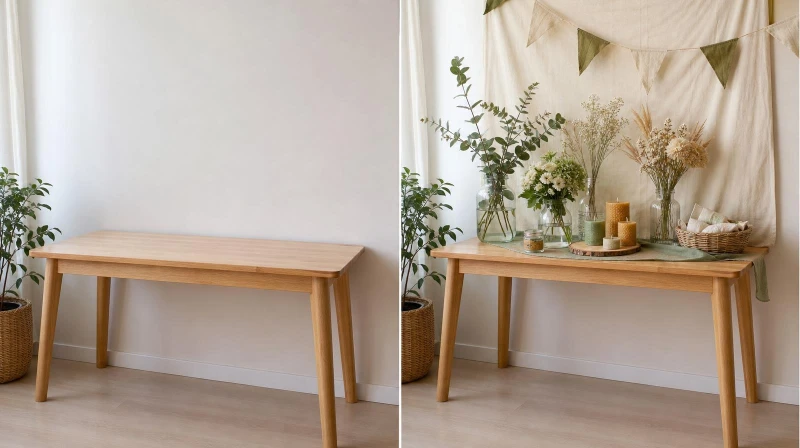 The same corner, styled with a fabric backdrop, greenery, and candles, all reusable or compostable.
Low-waste swaps
Small swaps cut most of the waste:
- Fabric backdrop instead of plastic or foil curtains.
- Paper or honeycomb decorations instead of foil balloons.
- Beeswax or soy candles instead of plastic light-up decor.
- Cloth napkins instead of paper.
- Real plates, or compostable ones, instead of plastic.
Eco-friendly tableware
The table is where most party waste comes from:
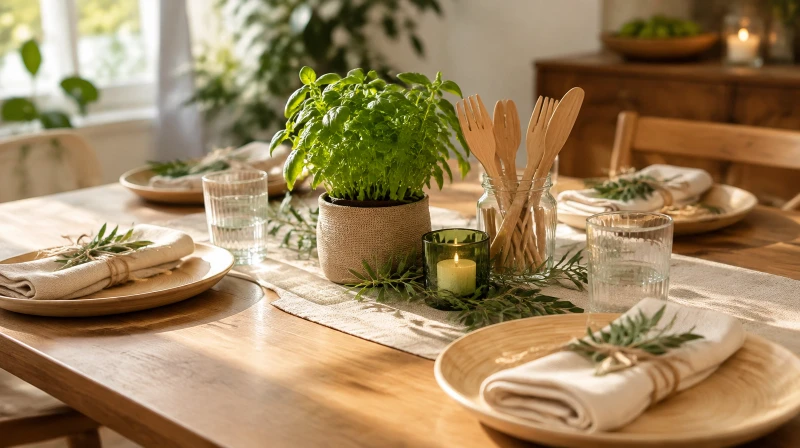 Compostable plates and cloth napkins reduce waste at the table.
- Use real dishes and glasses if you can wash up. (This is significantly better than single-use, even factoring in the water used for washing).
- Choose compostable plates and cutlery for big groups. Note: “Compostable” only helps if you have access to a commercial composting facility or a hot home compost bin. Throwing them in the regular trash defeats the purpose, as they won’t break down properly in a landfill.
- Skip plastic straws, or use paper or reusable ones.
- Use cloth napkins tied with twine.
- Serve drinks from a big dispenser instead of individual bottles.
Cost and quantities at a glance
How much to buy
For a party of 10 to 15 guests:
- Greenery and florals: 5 to 10 stems, fresh or dried.
- Fabric backdrop: one panel about 6 to 8 feet wide.
- Glass jars or vases: 3 to 6 for flowers and candles.
- Cloth napkins: one per guest, reusable.
- Compostable plates: one per guest, plus spares, if not using real dishes.
What it costs
This assumes you reuse fabric and jars you own and use free greenery:
| Item | What’s included | Approx. cost |
|---|---|---|
| Fresh or dried florals | 5 to 10 stems | $12 |
| Candles (beeswax or soy) | 4 to 6 | $12 |
| Compostable plates and napkins | For 12 to 15 | $12 |
| Twine and paper accents | Ties, tags | $4 |
That comes to about $40. Free greenery from the garden and reusing fabric, jars, and dishes you own brings it well below that.
Best buys, skips and mistakes to avoid
Worth buying and worth skipping
- Worth it: a reusable fabric backdrop, real tableware, and fresh greenery. They look great and significantly reduce your party’s footprint.
- Skip: foil balloons, plastic streamers, and single-use plastic tableware. They only go in the bin and often are not recyclable in municipal facilities.
Mistakes to avoid
- Buying new “eco” decor you will not reuse. Reusing what you own is greener than buying anything new.
- Foil balloons. They are not recyclable. Use paper or fabric instead.
- Single-use plastic tableware. Choose real or compostable.
- Cut flowers you toss. Use potted plants or compost the stems.
- Over-decorating. One reusable focal point beats a room full of throwaway pieces.
If you have little space
Small party? Style one corner with a fabric panel, a jar of greenery, and a few candles. A small reusable setup is naturally low-waste and still feels festive. For more small-space tricks, see our small-space party decorating ideas.
Plan ahead
- A few days before: Gather greenery, florals, candles, and any compostable tableware.
- The day before: Hang the fabric backdrop and arrange jars and vases.
- The day of: Add fresh greenery and flowers, set the table, and light the candles. Plan on about 1.5 hours.
Shopping checklist
- A reusable fabric or macrame backdrop
- Fresh or dried greenery and florals
- Beeswax or soy candles
- Glass jars and vases
- Cloth napkins and tablecloth
- Real or compostable plates
- A drink dispenser instead of bottles
- Potted plants as decor and favors
Helpful safety sources
A few trusted places for the safety points in this guide:
- NFPA: safety with candles: Fire safety rules for candles, such as keeping them away from anything that can burn.
- HealthyChildren (AAP): choking prevention: Why balloons and broken balloon pieces are a choking risk for young children.
FAQ
What are eco-friendly party decorations?
Eco-friendly party decorations are pieces you can reuse, compost, or recycle instead of throwing away. Think fabric backdrops, fresh or dried greenery, glass jars, cloth napkins, and compostable tableware, rather than foil balloons and single-use plastic.
How do I decorate a party without plastic?
Use natural materials like greenery, flowers, branches, and fruit, and reusable pieces like a fabric backdrop and cloth bunting. Swap foil balloons for paper decorations and plastic plates for real or compostable ones.
Are eco-friendly decorations more expensive?
Not usually. Reusing fabric, jars, and dishes you own and using free greenery can cost less than buying new plastic decor. A styled eco setup can start around $40, and reusable pieces save money every party after.
What can I use instead of balloons?
Paper decorations, honeycomb balls, fabric or tassel garlands, fresh greenery, and dried flowers all give color and shape without foil or latex waste. A greenery or fabric backdrop makes a big impact.
What is the most eco-friendly party tableware?
Real dishes and glasses you wash and reuse generally have the lowest environmental impact over time. For big groups, choose compostable plates and cutlery (but only if you can actually compost them locally), use cloth napkins, and serve drinks from a dispenser instead of individual bottles.
How do I make a party backdrop eco-friendly?
Use a fabric, macrame, or greenery backdrop you can store and reuse, rather than plastic or foil curtains. Add fresh or dried florals, and it looks just as styled while cutting the waste.
How do I throw a low-waste party in a small space?
Style one corner with a reusable fabric panel, a jar of greenery, and a few candles. A small reusable setup is naturally low-waste, easy to store, and still feels festive.
Related articles
- DIY Tassel Garland Tutorial
- Small-Space Party Decorating Ideas
- 15 Party Backdrop Ideas
- Budget Birthday Party Ideas Under $100
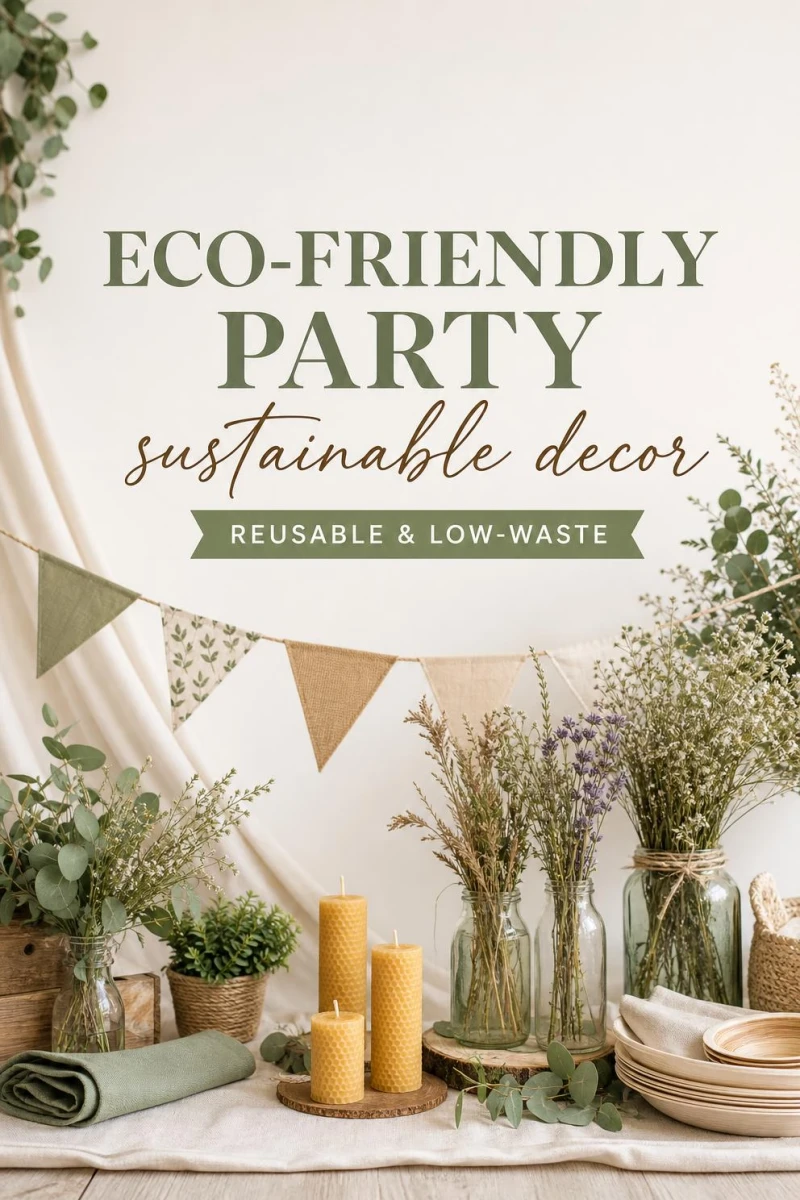
📌 Pin this for later!
Recreate This Look: Complete Supply Checklist
Every prop, decor item, and material identified in our styled photos, linked directly to top-rated supplies on Amazon.
Draped cream linen fabric as the backdrop.
Recycled glass jars and bottles holding greenery and dried flowers.
Fluted glass vases with greenery.
Mason jars used as vases with jute ties.
Twine tied around jars and napkins.
Dried grasses in vase arrangements.
Baby's breath in jars and vases.
Lavender stems in a jar (pin image).
Dried citrus on wood slice centerpieces.
Pinecones in the wood slice centerpieces.
Eucalyptus sprigs in vases and on the table.
Clear votives with candles.
Jute-wrapped glass vase (reusable decor image).
Cloth napkins with twine rings at each setting.
Gauzy sage runner along the table.
Compostable plates and bowls stacked on the table (pin image).
Baskets holding napkins and plants.
Neutral linen cloth on the table.
Reusable stoneware plates at place settings.
Wood crates used as risers (pin image).